
Brushing two times daily for at least two minutes each time is the first step in keeping your teeth and gums healthy. But even the best toothbrush can’t fully cleanse the spaces between your teeth. That’s why Dr.Jain recommends you floss once a day to remove food particles and plaque – the sticky film on your teeth that can lead to cavities and gum disease.
Plaque contains cavity-causing bacteria that feed on leftover food in your mouth. It produces acids that can harm the shiny, protective surface of your teeth, setting the stage for tooth decay.
Plaque that isn’t cleansed away by brushing or flossing can harden into a rough substance called tartar or calculus. Tartar builds up along your gum line, which can lead to gum disease. Once tartar forms, only your dentist can remove it, but flossing every day can prevent plaque buildup.
5 steps for flawless flossing
Ever wondered if you’re using dental floss the right way? Here’s how to floss like a boss.
- Break off about 18 inches of floss, wrapping most of it around one of your middle fingers. Wind the remaining floss around the same finger of the opposite hand. This finger will take up the floss as you move along.

- Hold the floss tightly between your thumbs and forefingers.

- Guide the floss between your teeth using a gentle, rubbing motion. Never snap the floss into the gums.

- When the floss reaches the gum line, curve it into a C shape against one tooth. Gently slide it into the space between the gum and the tooth.

- Hold the floss tightly against the tooth, slightly away from the gums. Gently rub the side of the tooth with an up-and-down motion, following the shape of the tooth. Repeat this method on the rest of your teeth, top and bottom. Don’t forget the back side of your last teeth (at the very back of your mouth.)

Which flossing tool is right for you? Talk with your dentist and try different options to see which one you like best. Many people find that classic string floss works well. Dental picks and tiny brushes can be good for reaching out-of-the-way spots. There are pre-threaded flossers that come fitted with picks or brushes at one end, giving you a couple of different ways to get between teeth.
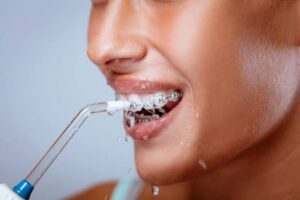
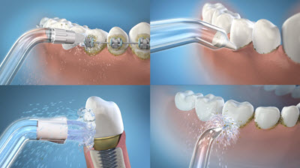
A water flosser, which uses a gentle stream of water to rinse away food and plaque, can be useful if you find other tools hard to work with. People with braces, bridges and other dental work may find that a water flosser helps them reach every nook and corner.