
Tooth whitening or tooth bleaching is the process of lightening the colour of the teeth. Whitening is often desirable when teeth become yellowed over time for a number of reasons, and can be achieved by changing the intrinsic or extrinsic colour of the teeth.
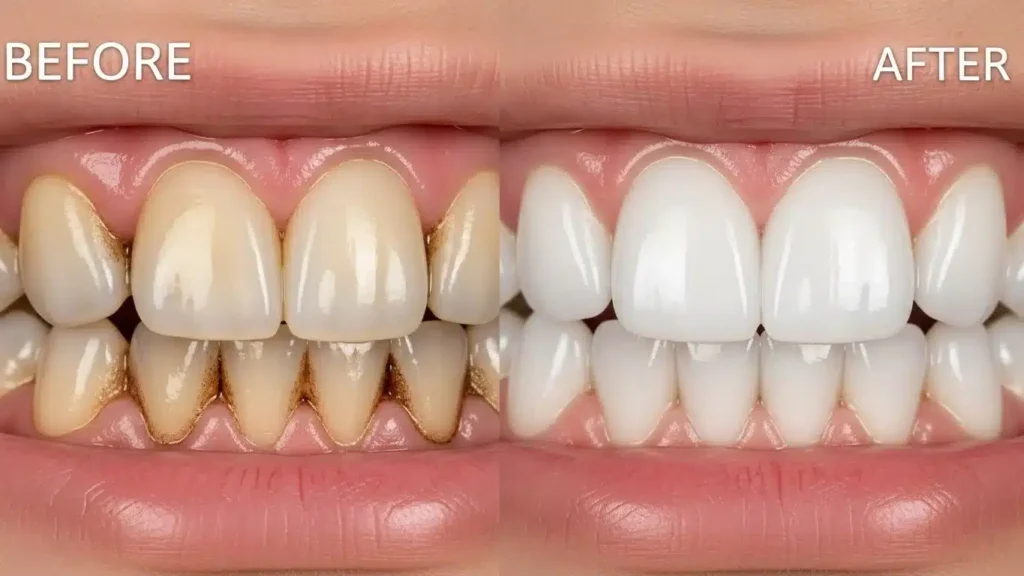
The combination of intrinsic colour and the presence of extrinsic stains on the tooth surface influence the colour and thus the overall appearance of teeth. The scattering of light and absorption within enamel and dentine determine the intrinsic colour of teeth and because the enamel is relatively translucent, the dentinal properties can play a major role in determining the overall tooth colour. On the other hand, extrinsic stain and colour is the result of coloured regions that have formed within the acquired pellicle on the enamel surface and can be influenced by lifestyle behaviours or habits.
Extrinsic staining
Extrinsic staining, is largely due to environmental factors including smoking, pigments in beverages and foods, antibiotics, and metals such as iron or copper. Coloured compounds from these sources are adsorbed into acquired dental pellicle or directly onto the surface of the tooth causing a stain to appear.
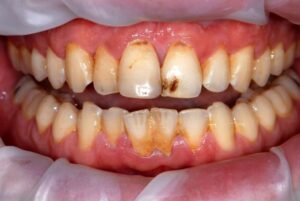
Extrinsic staining may be removed through various treatment methods like oral prophylaxis, micro-abrasion, whitening toothpastes, etc.
Intrinsic staining
Intrinsic staining primarily occurs during the tooth development either before birth(developmental defects) or after birth(trauma,caries,flourosis,tetracycline stains, etc). Intrinsic stains are those that cannot be removed through mechanical measures such as debridement or a prophylactic stain removal. As the age of the person increases, the teeth can also appear yellower over time.
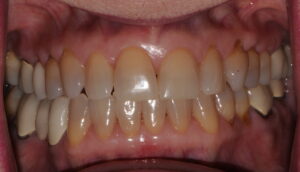
Such stains can be lightened or to some extent removed by bleaching or whitening techniques.
Prior to proceeding to tooth whitening alternatives, it is advised that the patient comes into the dental office to have a comprehensive oral examination that consists of a full medical, dental, and social history. This will allow the clinician to see if there is any treatment that needs to be done such as restorations to remove cavities, and to assess whether or not the patient will be a good candidate to have the whitening done. The clinician would then debride (clean) the tooth surface with an ultrasonic scaler, hand instruments, and potentially a prophy paste to remove extrinsic stains as mentioned above. This will allow a clean surface for maximum benefits of whichever tooth whitening method the patient chooses.
In-Office Bleaching
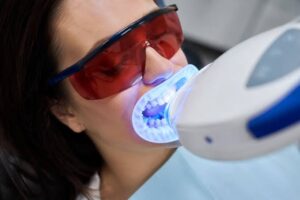
In-office bleaching procedures generally use a light-cured protective layer that is carefully painted on the gums and papilla (the tips of the gums between the teeth) to reduce the risk of chemical burns to the soft tissues. The bleaching agent is either carbamide peroxide, which breaks down in the mouth to form hydrogen peroxide, or hydrogen peroxide itself. The bleaching gel typically contains between 10% and 44% carbamide peroxide, which is roughly equivalent to a 3% to 16% hydrogen peroxide concentration.
At home tooth whitening
Products are available from dentists or ‘over the counter‘ (OTC). At home whitening methods include over-the-counter strips and gels, whitening rinses, whitening toothpastes, and tray-based tooth whiteners.
Indications
Tooth whitening may be undertaken for a variety of reasons, but whitening may also be recommended to some individuals by dental professionals.
- Intrinsic tooth staining
- Aesthetics
- Dental fluorosis
- Endodontic treatment (internal bleaching)
- Tetracycline staining
Contraindications
Some groups are advised to carry out tooth whitening with caution as they may be at higher risk of adverse effects.
- Patients with unrealistic expectations
- Allergy to peroxide
- Pre-existing sensitive teeth
- Cracks or exposed dentine
- Enamel development defects
- Acid erosion
- Receding gums (gingival recession) and yellow roots
- Defective dental restorations or tooth decay
- Lactating patients
- Individuals with poor oral hygiene
Risks
Some of the common side effects involved in teeth whitening are increased sensitivity of the teeth, gum irritation, and extrinsic teeth discolouration, return to previous shade after a few days, weakening of the enamel, over-use, un-even results, etc.